5 Awesome Directus Alternatives
 Yulei Chen
Directus is a popular open-source data platform that wraps any SQL database with real-time REST and GraphQL APIs, plus a no-code admin app for managing content. It's used as a headless CMS, internal tool builder, and backend-as-a-service. Directus Cloud starts at $15/month for a basic project, but plans with more capacity run $49 to $499/month — and organizations with over $5M in annual revenue need a commercial license.
The good news? You can self-host Directus for just €9 per month with Sliplane — one click, no server management needed.
But maybe Directus isn't quite the right fit for your project. Maybe you want a more code-first CMS, a lighter-weight backend, or a different approach to content modeling. Let's look at 5 awesome alternatives!
1. Strapi
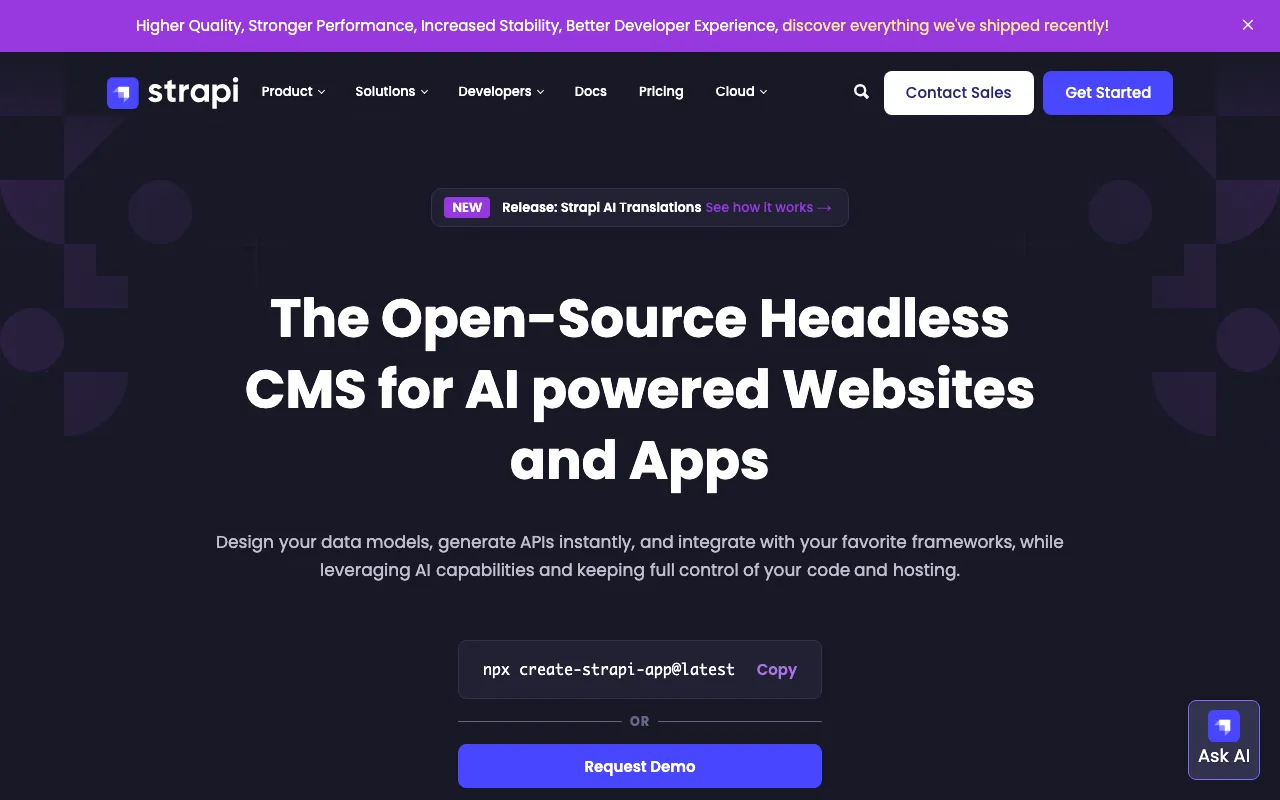
Strapi is the most widely adopted open-source headless CMS with over 60,000 GitHub stars. While Directus wraps an existing database, Strapi takes a different approach — you define content types through its admin UI or code, and Strapi manages the database schema for you. It generates both REST and GraphQL APIs automatically.
- Features: Visual content-type builder, customizable REST and GraphQL APIs, role-based access control, plugin marketplace, internationalization (i18n), media library, draft/publish workflow, and Strapi AI for content generation.
- Why You Should Use It: If you want a mature, battle-tested headless CMS with a huge community and plugin ecosystem, Strapi is the safest bet. The content-type builder makes it easy for non-developers to define schemas, and the plugin system lets you extend nearly everything.
- Why Not: Strapi manages its own database schema, so you can't easily connect it to an existing database the way Directus does. Migrations can be tricky, and the learning curve for customizing controllers and services is steeper than Directus's straightforward API layer.
- Pricing: Free (open-source, MIT); Strapi Cloud starts at $18/month (Essential). Self-hosted Community Edition is completely free. Growth plan at $45/month for 3 seats.
2. Payload CMS
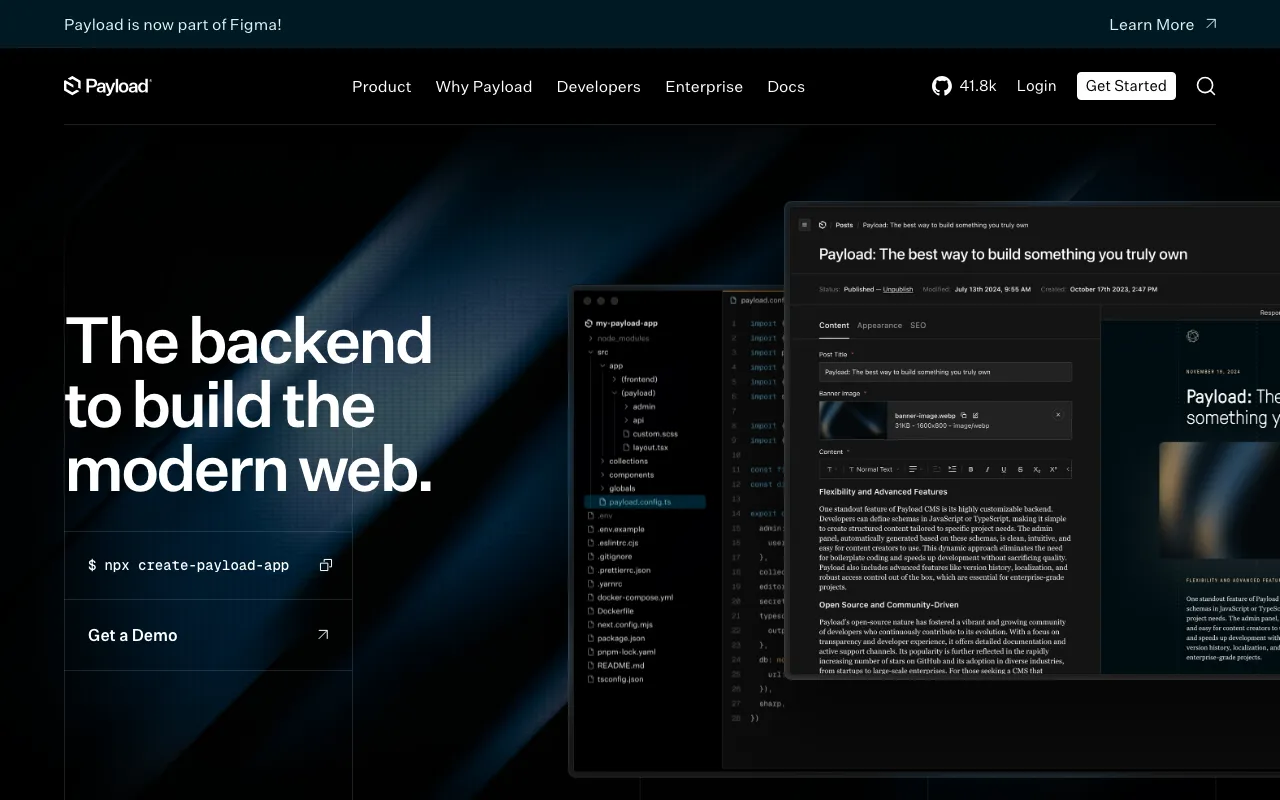
Payload is a modern, TypeScript-native headless CMS built for developers who want full control. Unlike Directus's no-code approach, Payload takes a code-first philosophy — you define your collections, fields, hooks, and access control entirely in TypeScript config files, giving you type safety across your entire stack.
- Features: Code-first config with full TypeScript support, auto-generated REST and GraphQL APIs, built-in authentication, rich text editor with Lexical, live preview, access control at field level, localization, versioning, and a powerful admin UI that's fully customizable.
- Why You Should Use It: If you're a TypeScript developer who wants your CMS to feel like a natural extension of your codebase, Payload is unmatched. The code-first approach means your content schema lives in version control, deployments are reproducible, and you get full type safety from database to frontend.
- Why Not: The code-first approach means non-technical team members can't modify the schema through the UI like they can in Directus. You need a developer to make structural changes. It also doesn't support wrapping an existing database — Payload manages its own.
- Pricing: Free (open-source, MIT); Payload Cloud starts at $35/month (Standard). Self-hosting is completely free with no feature limitations.
3. Sanity
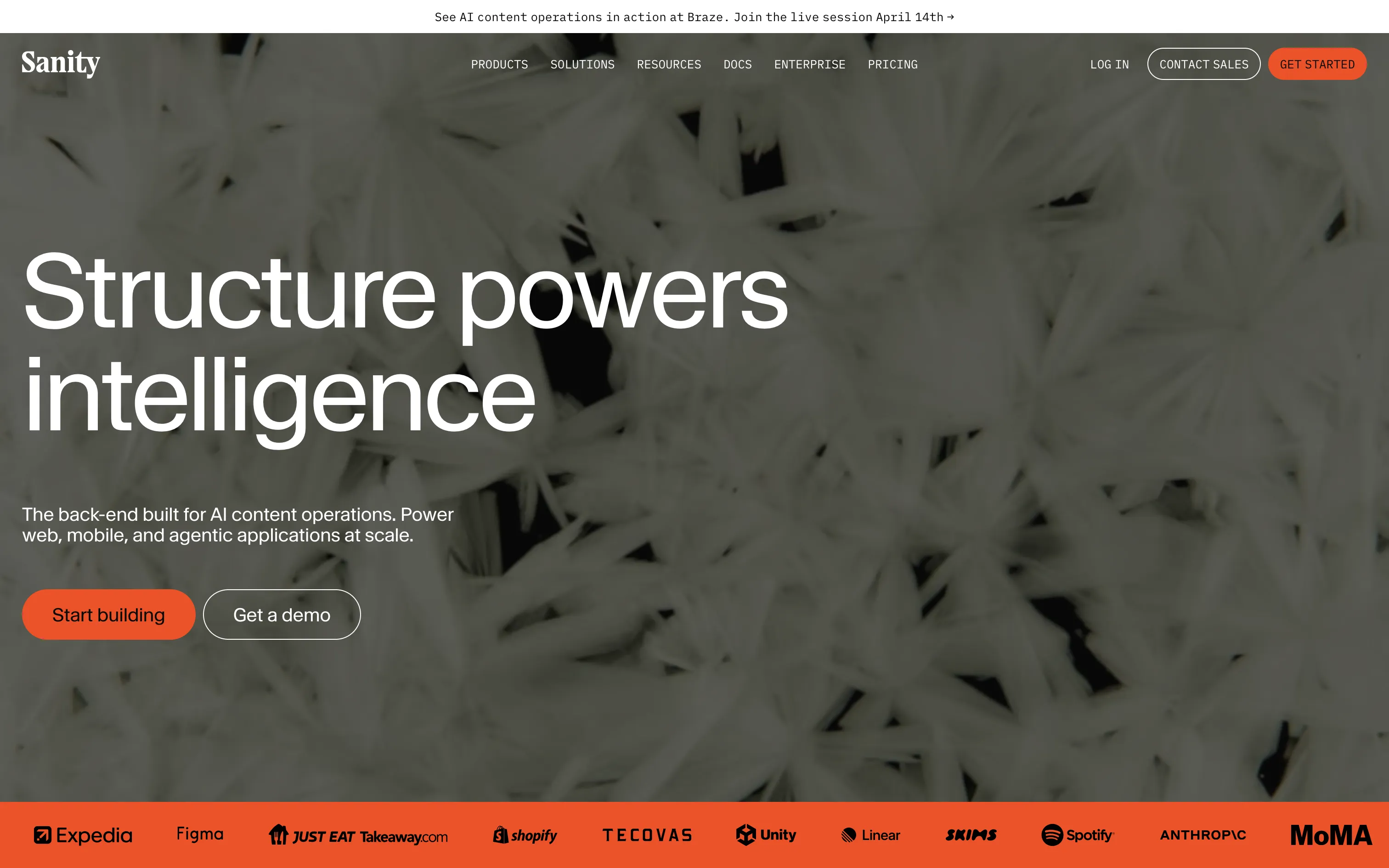
Sanity takes a fundamentally different approach from Directus by hosting your content in a cloud-based "Content Lake" with real-time collaboration built in. Instead of wrapping a SQL database, Sanity stores structured content in its own managed infrastructure and provides a fully customizable editing studio.
- Features: Real-time collaborative editing, customizable React-based Sanity Studio, GROQ and GraphQL query languages, structured content with portable text, live previews, visual editing, content versioning, CDN-backed asset pipeline, and a powerful plugin ecosystem.
- Why You Should Use It: If real-time collaboration is critical — multiple editors working on the same document simultaneously, like Google Docs — Sanity is the best in class. The Content Lake also handles scaling automatically, so you never worry about database performance or backups.
- Why Not: Sanity is not self-hostable — the Content Lake is a managed service. If data sovereignty or running everything on your own infrastructure matters, Directus or another self-hosted option is a better fit. Costs can also grow with scale since pricing is usage-based.
- Pricing: Free tier with 3 users and 500k API calls/month; Growth at $15/user/month with 25k documents included. Enterprise pricing is custom.
4. PocketBase
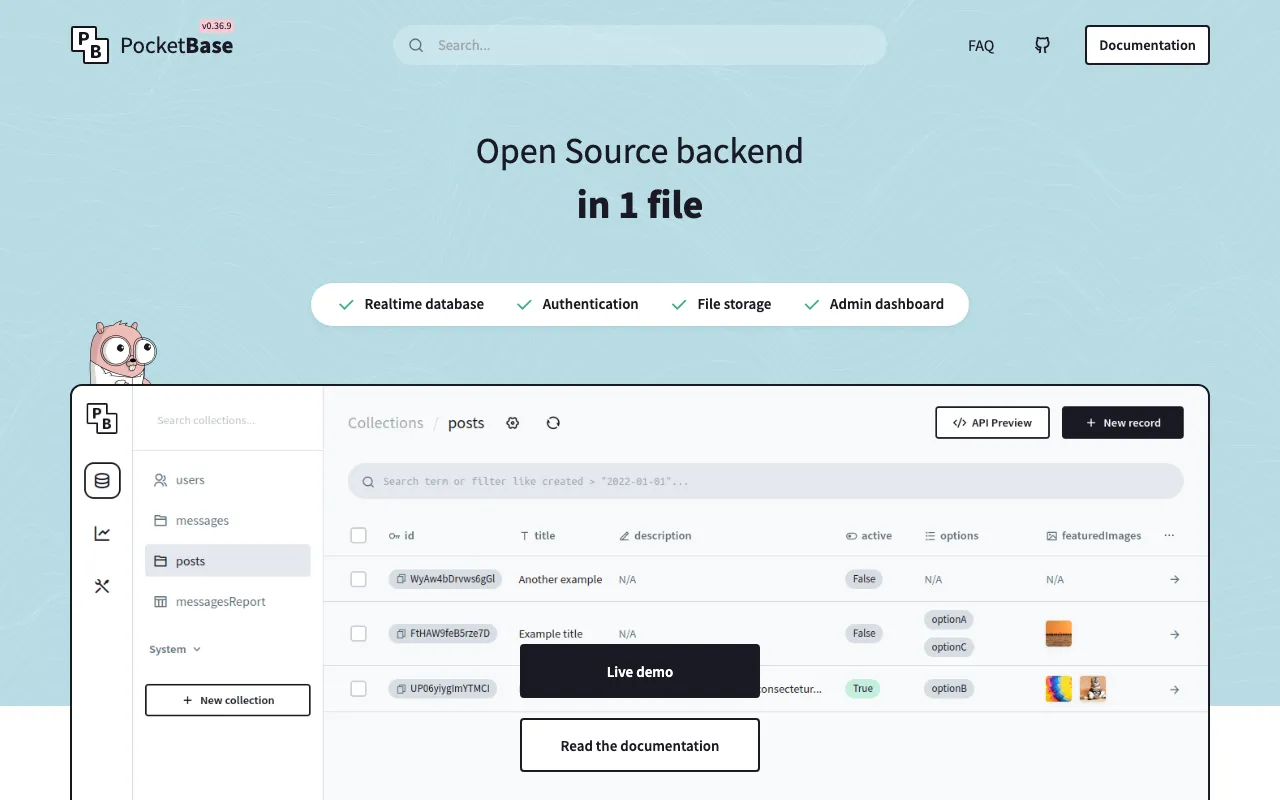
PocketBase is an open-source backend packed into a single executable file. Written in Go, it bundles an embedded SQLite database, real-time subscriptions, authentication, and file storage into one lightweight binary — making it the polar opposite of Directus's more feature-rich approach.
- Features: Single-file deployment (just one binary), embedded SQLite with real-time subscriptions, built-in email/password and OAuth2 authentication, file storage (local or S3-compatible), auto-generated REST API, admin dashboard, and support for custom Go or JavaScript extensions.
- Why You Should Use It: If you're building a side project, MVP, or small-to-medium app and want the simplest possible backend, PocketBase is hard to beat. Download one file, run it, and you have a fully functional backend with auth, database, and file storage. No Docker, no dependencies, no configuration needed.
- Why Not: PocketBase uses SQLite, which means it's not designed for high-concurrency production workloads. There's no built-in clustering or horizontal scaling. The ecosystem is much smaller than Directus's, and there's no GraphQL API — only REST.
- Pricing: Completely free and open-source (MIT). No cloud offering — you self-host it. Running it on Sliplane costs as little as €9/month.
5. NocoDB
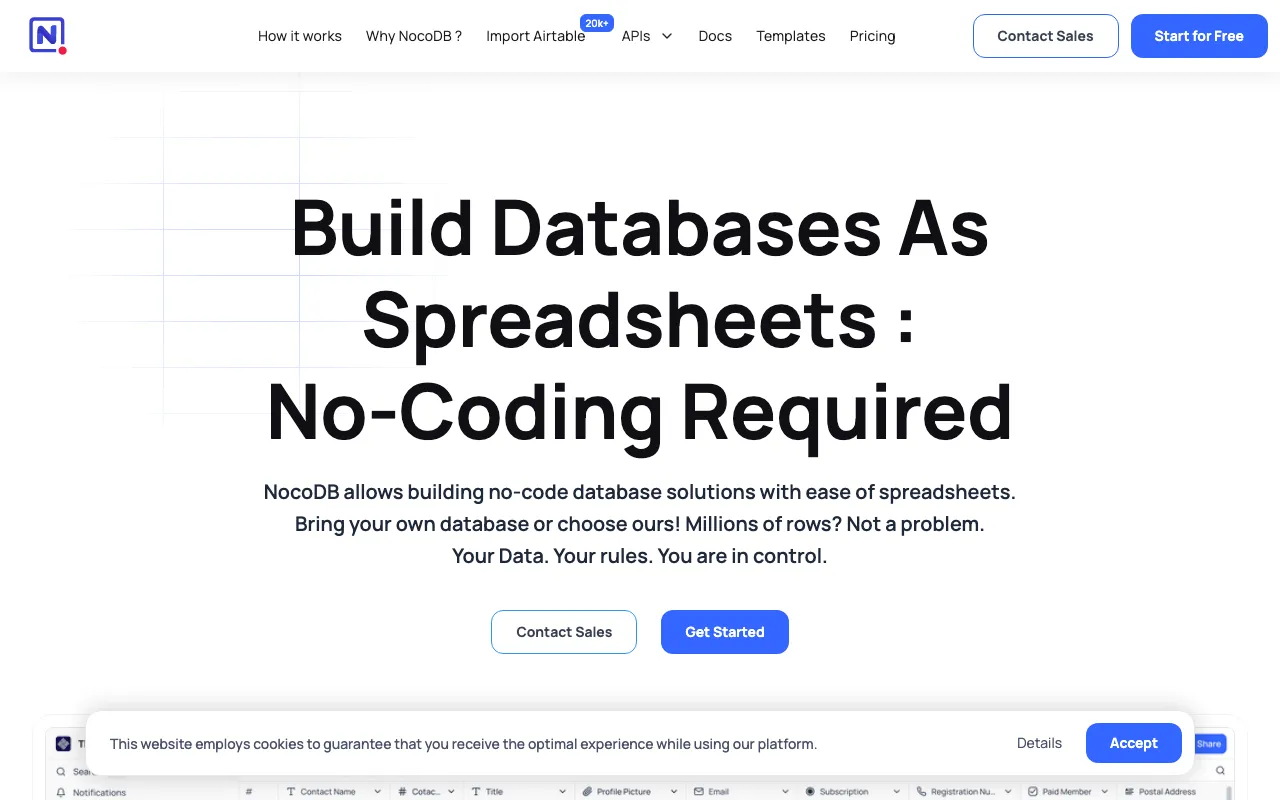
NocoDB is an open-source Airtable alternative that, like Directus, connects to existing SQL databases (PostgreSQL, MySQL, SQL Server, SQLite) and provides a visual interface on top. But while Directus focuses on being a headless CMS with APIs, NocoDB focuses on giving teams a spreadsheet-like experience for working with relational data.
- Features: Spreadsheet-style grid, kanban, gallery, and form views, connects to existing databases, auto-generated REST APIs, role-based access control, webhooks, formula and lookup fields, shared views with password protection, and automations.
- Why You Should Use It: If your team needs a collaborative database interface — something that feels like Airtable but runs on your own database — NocoDB is the closest you'll get. It's excellent for teams that need to browse, edit, and manage data without writing queries, while keeping everything on their own infrastructure.
- Why Not: NocoDB is designed for data management and internal tooling, not as a headless CMS for powering websites or apps. The API layer is simpler than Directus's (no GraphQL, less flexible filtering), and there's no built-in content versioning or draft/publish workflow.
- Pricing: Free (open-source, AGPL); NocoDB Cloud Plus at $12/seat/month, Business at $24/seat/month (billed for up to 9 editors). Self-hosting is free with no limits.
Conclusion
| Tool | Best For | Ease of Setup | Focus | Cloud Pricing |
|---|---|---|---|---|
| Directus | Wrapping existing SQL databases | Moderate | Headless CMS + data platform | $15-$499/mo |
| Strapi | Content-heavy applications | Easy | Headless CMS | $18/mo (Essential) |
| Payload CMS | TypeScript-first development | Moderate | Code-first headless CMS | $35/mo (Standard) |
| Sanity | Real-time collaboration | Easy | Managed content platform | $15/user/mo |
| PocketBase | Side projects and MVPs | Very Easy | Lightweight backend | Free (self-host only) |
| NocoDB | Spreadsheet-style data management | Easy | Airtable alternative | $12/seat/mo |
Each tool fills a different niche: Strapi for mature headless CMS needs, Payload for type-safe code-first development, Sanity for real-time collaborative editing, PocketBase for dead-simple lightweight backends, and NocoDB for spreadsheet-style database management.
Directus remains a great choice if you need to wrap an existing SQL database with instant APIs and a flexible admin UI. But if your needs lean toward a specific CMS workflow, lighter infrastructure, or collaborative editing, one of these alternatives might be a better fit.
Want to self-host Directus? Head to Sliplane and deploy Directus for €9/month.